

Bartakke Enclosures
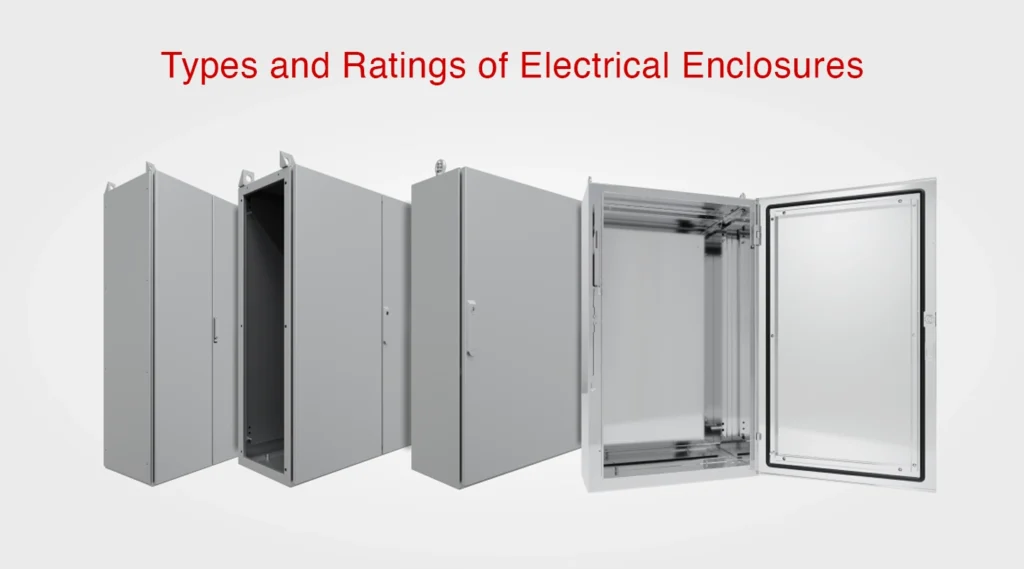
Types of Electrical Enclosures and How to Choose Right One
In today’s industrial and commercial settings, electrical enclosures play a vital yet often overlooked role. These protective boxes and cabinets keep electrical and electronic equipment safe from dust, moisture, and corrosion, while preventing accidental contact. They also help maintain safety standards and ensure that systems work efficiently and reliably. Learn about different Types of Electrical Enclosures and How to Choose Right One for safety, durability, and performance in any industrial environment.
From small junction boxes to large modular control cabinets, selecting the right electrical enclosure requires an understanding of different types, materials, and protection ratings. This guide explains how to choose the right option for your application.
What Are Electrical Enclosures?
Electrical enclosures are cabinets or boxes designed to hold components such as switches, relays, circuit breakers, and controllers. Their main job is to protect both the equipment inside and the people who operate or maintain it.
Why Enclosures Matter
Using the wrong type of enclosure can lead to overheating, corrosion, or electrical hazards. The right one helps equipment last longer, ensures safety, and meets certification standards like IP (Ingress Protection), NEMA, and ATEX for hazardous environments.
Common Types of Electrical Enclosures
Wall-Mounted Enclosures: Ideal for compact installations where floor space is limited. Common in control systems, telecom hubs, and machine panels.
Floor-Standing Enclosures: Used in larger setups such as automation or energy systems. These can also be modular to allow future expansion.
Modular Enclosures: Designed for scalability, making it easy to add or modify components.
Junction Boxes: Smaller boxes for connecting or branching electrical circuits, available for indoor and outdoor use.
Server and Rack Cabinets: Primarily used in data centers to organize servers, power distribution, and cooling systems.
Material Options
Mild Steel (CRCA): Strong and affordable, usually powder-coated for corrosion resistance. Suitable for indoor use.
Stainless Steel (SS304 / SS316L): Highly resistant to corrosion, ideal for pharmaceutical, marine, and food industries.
Aluminum: Lightweight and corrosion-resistant, often used in mobile or temporary setups.
Polycarbonate / ABS Plastic: Non-conductive and UV-resistant, suitable for light-duty indoor applications.
Fiberglass-Reinforced Polyester (FRP): Offers good strength, insulation, and resistance to harsh environments. Common in wastewater and telecom sectors.
Understanding IP Ratings
IP ratings indicate the level of protection against dust and water:
- IP54–IP55: Basic protection from dust and splashes.
- IP65: Dust-tight and resistant to water jets.
- IP66: Dust-tight and resistant to heavy water jets.
- IP67: Can withstand temporary immersion in water.
Choose the IP rating based on the working environment—whether it’s indoor, outdoor, humid, or dusty.
NEMA Ratings
In North America, NEMA ratings are widely used:
- NEMA 1: Indoor, basic protection.
- NEMA 4X: Outdoor use, corrosion-resistant.
- NEMA 12: Indoor, protects from dust and oil.
Specialty Enclosures
ATEX / Explosion-Proof Enclosures: Built for hazardous areas like oil and gas facilities where flammable gases or dust may be present.
EMC Shielded Enclosures: Used where electromagnetic interference must be minimized, such as in defense or aerospace.
Hygienic Enclosures: Seamless and easy to clean, perfect for food, beverage, and pharmaceutical environments.
Common Industry Applications
Electrical enclosures are used in various industries, including:
- Automation and machine control
- Renewable energy (solar, wind, battery systems)
- Oil and gas
- Pharmaceutical and food processing
- Water and wastewater treatment
- Telecom and IT
- Infrastructure (railways, airports, and utilities)
Choosing the Right Enclosure
Before selecting an enclosure, consider:
- Location: Indoor or outdoor use
- Hazards: Exposure to dust, water, or chemicals
- Compliance: Required IP, NEMA, or ATEX certifications
- Material: Suitability for the environment and budget
- Size and layout: Space for equipment and future expansion
- Cooling needs: Whether ventilation or thermal management is needed
Bartakke Electrical enclosures are essential for protecting equipment and ensuring operational safety. A thoughtful selection can reduce downtime, prevent failures, and extend the life of your systems. Whether for a new setup or an upgrade, understanding enclosure types, materials, and ratings helps create a safer, more efficient electrical infrastructure.