

A Complete Guide to Compartmentalized Electrical Panels and Their Uses
Compartmentalized electrical panels are specialized distribution systems that physically separate electrical components and circuits within a single enclosure using barriers. Unlike standard panels where all components share the same interior space, compartmentalized panels create distinct, isolated sections that prevent physical contact between different electrical systems. A Complete Guide to Compartmentalized Electrical Panels and Their Uses – learn how they improve safety, efficiency, and organization in electrical systems.
Standard electrical panels typically feature a single compartment housing all circuit breakers, busbars, and terminals with minimal separation. In contrast, compartmentalized panels employ physical dividers to create multiple independent chambers within the same panel, with each section potentially having its own access door and dedicated functions according to the National Electrical Code guidelines.
Key Structural Components
The core structural elements that define control panel compartment enclosures include:
- Internal barriers and dividers: Typically constructed of metal or fire-resistant materials that physically separate circuits
- Separate wireways: Dedicated channels for routing wires between compartments without compromising isolation
- Dedicated terminal blocks: Component-specific connection points that maintain separation between different circuit categories
- Individual access doors/covers: Allow maintenance access to specific compartments without exposing others
These components work together to create a system that maintains electrical and physical separation while functioning as a cohesive distribution panel.
Different Compartmentalization Configurations
Compartmentalized panels can be configured in several ways depending on application needs:
- Vertical separation: Dividing the panel into vertical sections for different power systems
- Horizontal separation: Creating separate levels for low-voltage control circuits, medium voltage distribution, and high-voltage systems
- Functional grouping: Organizing compartments by purpose (main distribution, branch circuits, control circuits)
- Criticality segregation: Separating emergency circuits from standard power circuits
Key Benefits of Circuit Isolation
Enhanced Electrical Safety Through Physical Separation
The primary advantage of compartmentalization is significantly improved safety. By physically isolating circuits, these panels prevent accidental contact between systems of different voltages and limit exposure to live parts during maintenance. This separation becomes crucial when working on one section while others remain energized.
Simplified Troubleshooting and Maintenance
When systems malfunction, compartmentalized designs allow technicians to isolate and access specific sections without disrupting the entire electrical system. This targeted approach reduces downtime and eliminates the need to de-energize unaffected circuits during routine maintenance.
Protection of Critical Circuits
By separating essential systems from standard power distribution, compartmentalized panels shield critical circuits from electromagnetic interference, power surges, and physical damage that might affect other sections. This protection is particularly valuable for life-safety systems that must remain operational regardless of conditions elsewhere in the facility.
Reduction of Arc-Flash Risks
Compartmentalization significantly reduces arc-flash hazard exposure by containing potential arc events within smaller spaces and limiting the available energy. According to IEEE 1584 calculations, this containment can reduce both the incident energy and arc flash boundary, thereby enhancing worker safety during maintenance operations.
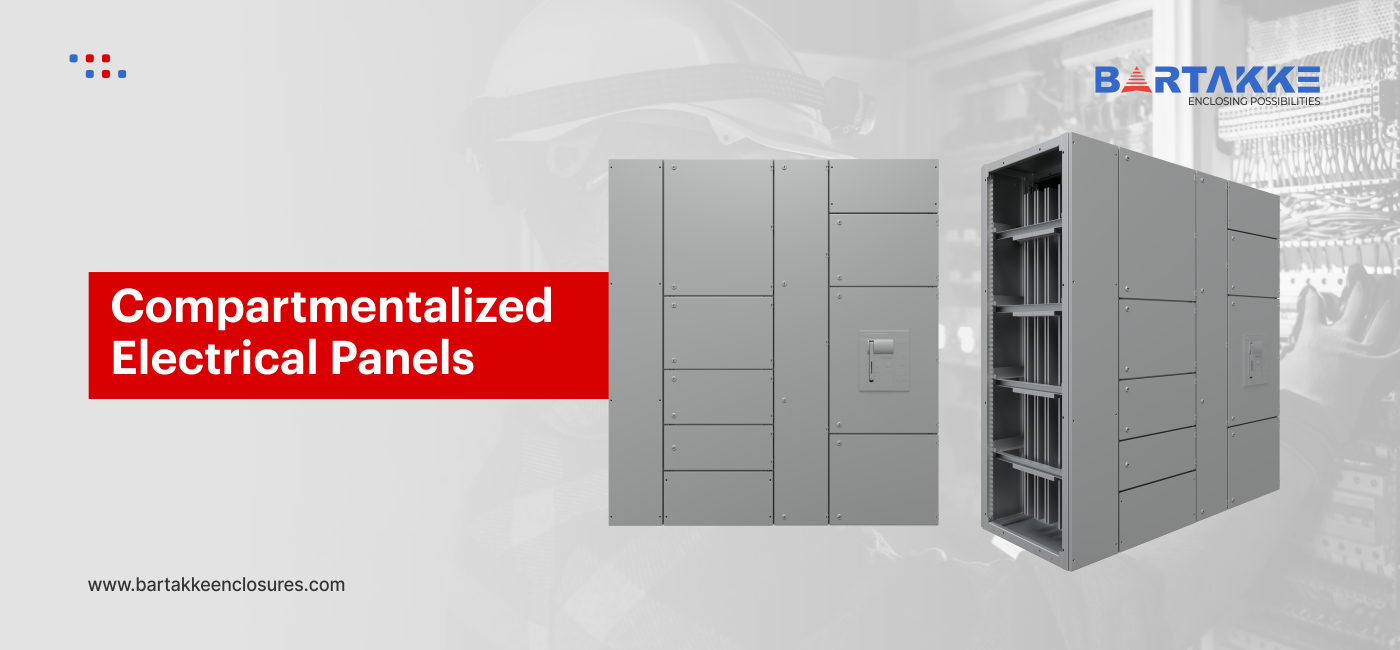
Compartmentalized Electrical Panels by Bartakke Enclosures – designed for safety, efficiency, and easy maintenance in industrial and commercial applications.
Primary Applications and Use Cases
Critical Infrastructure Facilities
Compartmentalized electrical panels are essential in facilities like:
- Water treatment plants requiring separation between control and power circuits
- Transportation control centers needing isolation of backup power systems
- Emergency communication facilities with redundant power systems
Industrial Environments with Mixed-Voltage Needs
Manufacturing facilities frequently require segregation between:
- High-voltage motor control circuits
- Low-voltage instrumentation and automation systems
- Variable frequency drive circuits that can generate harmonics
Healthcare Facilities
Hospitals implement compartmentalized systems to separate:
- Emergency power circuits for life-support equipment
- Normal power distribution
- Critical branch circuits for operating rooms and ICUs
- Equipment branch circuits for essential mechanical systems
Data Centers
Modern data facilities rely on compartmentalized designs for:
- Separation between UPS-backed critical loads and cooling system power
- Redundant power paths (A/B power) with physical isolation
- Separation of different voltage systems within the same distribution area