

Bartakke Enclosures
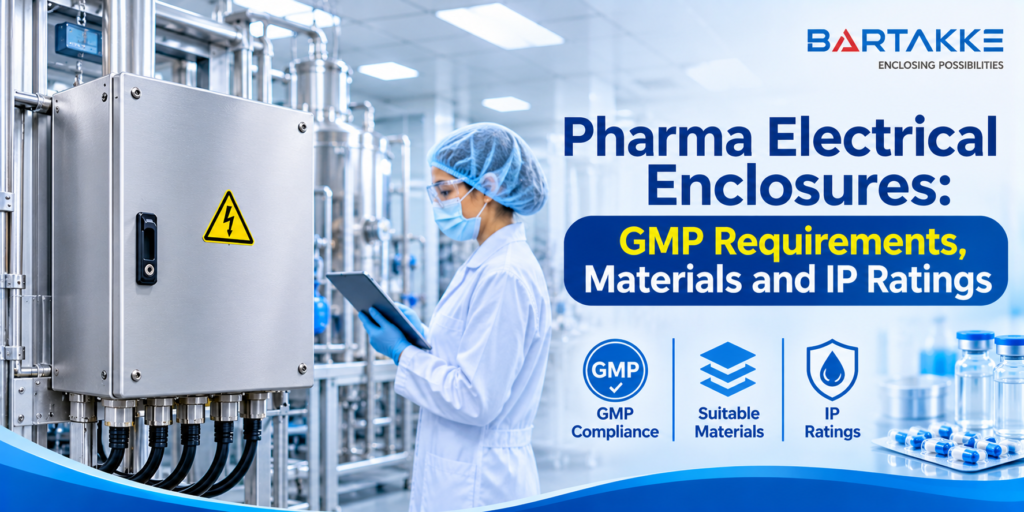
A pharmaceutical enclosure is a hygienic, sealed housing, usually stainless steel, that protects electrical and control equipment in GMP-regulated production and cleanroom areas without trapping contamination. In pharma plants, an enclosure is part of contamination control: it is cleaned often, inspected during audits and must not shed particles or harbour residue. As Indian manufacturers upgrade facilities, enclosure choice matters more.
Key takeaways
- GMP is a framework that facilities follow. It is not a certificate an enclosure can hold.
- Stainless steel (SS304 or SS316L) is the usual choice because it resists cleaning chemicals and wipes down easily.
- Smooth, crevice-free design matters as much as the material.
- IP66 is a common washdown starting point, but the area and cleaning method decide the final rating.
- Ask for material, finish and test documentation before you order.
Why enclosures matter in pharma manufacturing?
Enclosures matter in pharma because they sit inside areas where contamination, cleaning and audits all meet. A panel with rough welds, open seams or corroded surfaces can hold residue, shed particles or fail under repeated disinfection.
Pharma enclosures typically house PLCs, HMIs, motor controls, instrumentation and environmental monitoring equipment. They sit in production rooms, technical corridors and utility areas. The closer to the product, the stricter the hygiene demands.
What GMP means for electrical enclosures?
GMP (Good Manufacturing Practice) is a set of guidelines a facility follows to make medicines consistently and safely. There is no “GMP-certified enclosure”. The same applies to FDA and WHO guidance: they shape how a plant is designed, not a stamp a product carries.
In India, the revised Schedule M raises the bar for manufacturers. According to an industry article, it includes upgraded infrastructure norms, air handling systems, water quality management and stricter environmental monitoring. The same article reports that it was notified in January 2024, with large manufacturers expected to comply within six months and MSMEs given twelve months. Check the official notification for the exact requirements that apply to your plant. biospectrumindia
So what should a buyer actually ask for? Request:
- Material certificates for the stainless steel grade
- Surface finish details, such as polished or electropolished
- Ingress protection test evidence, not just a rating on a datasheet
- Build records that support your qualification (IQ/OQ) documentation
- Drawings and dimensions for your validation file
Cleanroom zones and where enclosures sit
Where an enclosure sits decides how hygienic it must be. Many plants still use the older Class 100 and Class 10,000 labels. These correspond roughly to ISO 5 and ISO 7 under ISO 14644-1, the current cleanroom classification.
Panels are often placed in technical or “grey” areas, outside the cleanest rooms, so servicing does not disturb the clean zone. When an enclosure must sit inside a controlled area, the design needs to be cleanable and the cable entries sealed so they do not shed particles.
Area | Typical enclosure approach |
Utility and technical areas | SS304 or coated steel, IP54–IP65 |
Production and packaging | SS304, IP65–IP66 |
Cleanroom-adjacent or washdown | SS316L, IP66, sloped top, smooth finish |
Treat this table as a starting point and confirm it against your specification and cleaning regime.
Why stainless steel?: SS304 vs SS316L
Stainless steel is preferred because it resists corrosion, tolerates repeated cleaning and has a smooth, non-porous surface. Mild steel with a coating can chip, and a chipped coating exposes metal that can rust and hold residue.
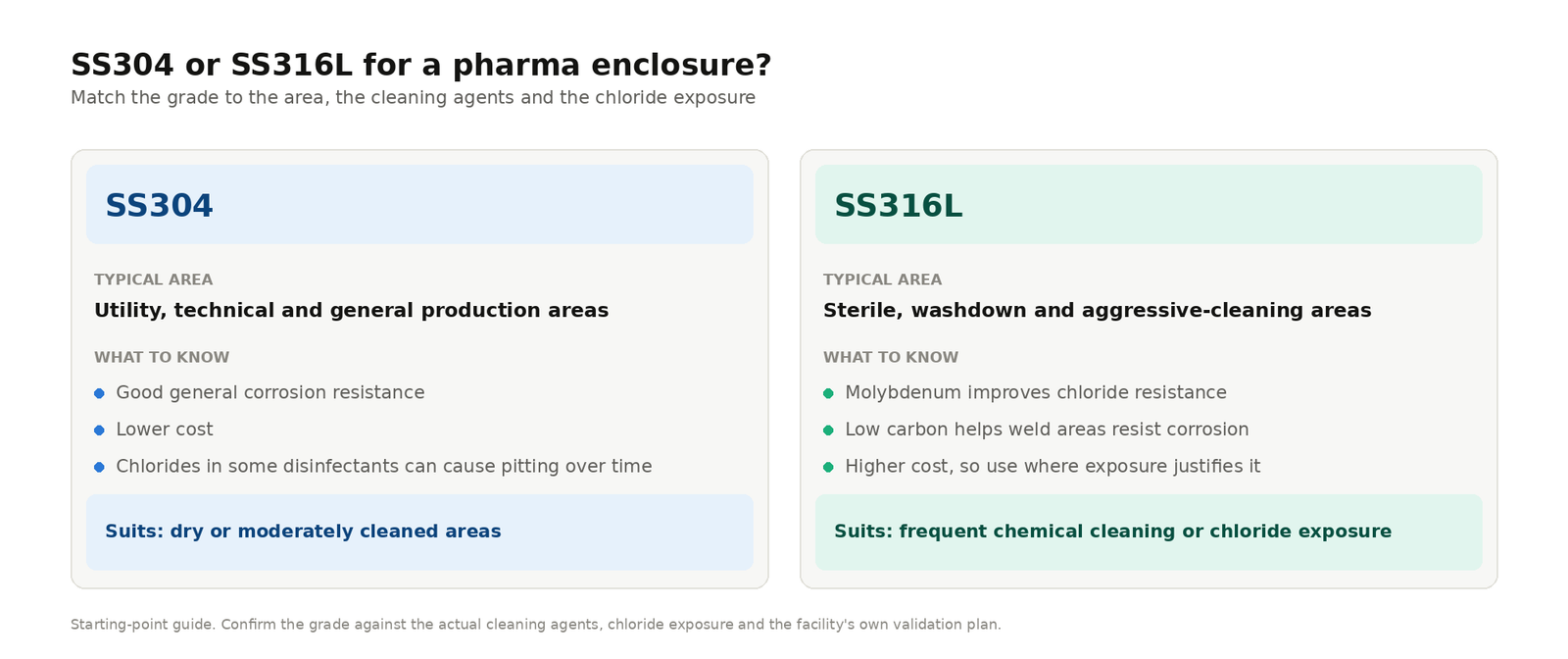
SS304 is good for general use. SS316L adds molybdenum, which improves resistance to chlorides found in some disinfectants and in humid or coastal sites. The “L” means low carbon, which helps welded areas resist corrosion. Fig 1 shows where each grade fits.
Factor | SS304 | SS316L |
General corrosion resistance | Good | Better |
Chloride resistance | Moderate | Higher |
Typical pharma use | Utility and general production areas | Sterile, aggressive-cleaning and corrosive-agent areas |
Cost | Lower | Higher |
Choose by the cleaning agents and exposure, not by habit. Specifying SS316L everywhere raises cost without benefit, while using SS304 where chlorides are present risks pitting.
Smooth, crevice-free design: what to look for?
Crevice-free design means removing the gaps, ledges and rough spots where residue, moisture or microbes can collect. A stainless enclosure with poor detailing can still be hard to clean. Fig 2 lists the features to check.
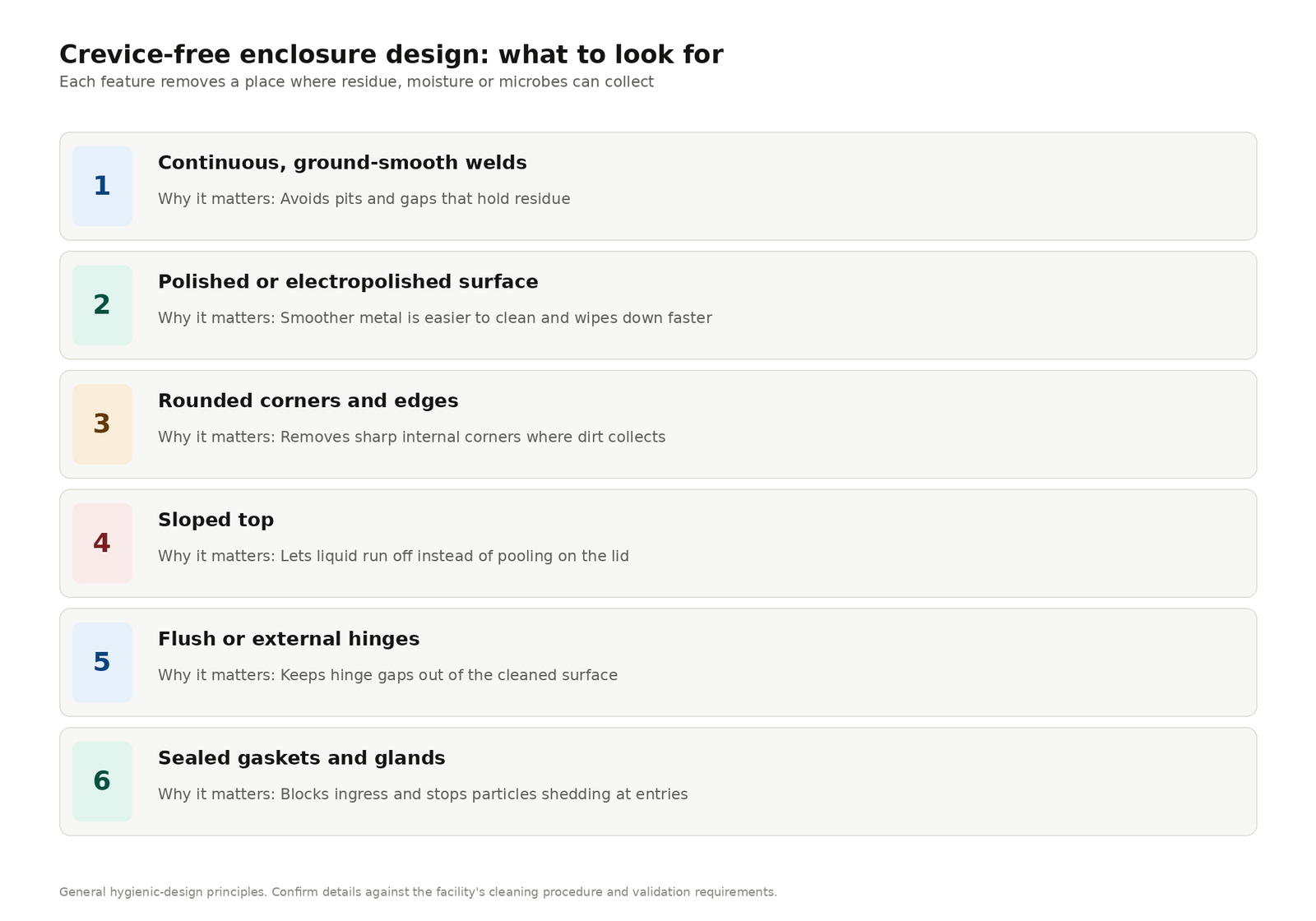
The main points are:
- Continuous, smooth welds. Gaps and pits in welds hold residue.
- Polished or electropolished finish. A smoother surface wipes down faster.
- Rounded corners. Sharp internal corners collect dirt.
- Sloped top. Liquid runs off instead of pooling on the lid.
- Flush or external hinges. These keep hinge gaps out of the cleaned surface.
- Sealed gaskets and glands. These block ingress and stop particles shedding at entries.
IP ratings for pharma explained
IP ratings, defined in IEC 60529, describe protection against solids and liquids. For pharma, the common ratings are:
- IP54: protected against dust and splashing. Suits dry utility areas.
- IP65: dust-tight and protected against water jets.
- IP66: dust-tight and protected against powerful water jets. A common choice for washdown areas.
A rating describes the enclosure when it was tested. It does not tell you how it will survive daily cleaning. Repeated washdown, hot water or aggressive agents can wear gaskets long before the steel fails. Where cleaning uses high-pressure or hot water, check whether a higher test standard is needed, and confirm that the manufacturer can document it.
Cable entries, ventilation and cooling in clean areas
Cable entries are the weak point of a clean enclosure. Use sealed glands, fit them correctly and avoid open or badly cut openings that shed particles.
Heat is the second issue. Ventilation openings let in air from the room, which conflicts with a sealed design. Where electronics generate significant heat, consider sealed cooling methods such as heat exchangers or air conditioners rather than open vents, and always size the enclosure for the heat load.
Maintenance and cleaning
Even a well-built enclosure needs care. A simple routine helps:
- Wipe down with cleaning agents approved for stainless steel
- Check gaskets regularly for cracks, flattening or residue
- Inspect glands and door seals after intensive cleaning cycles
- Replace worn parts before they affect the seal
Document these checks so they fit into your quality system.
Specification and documentation checklist
Before ordering, confirm:
- Installation area and cleanroom classification
- Stainless steel grade (SS304 or SS316L)
- Surface finish
- IP rating and any washdown method
- Cleaning agents used on site
- Heat load and cooling method
- Cable entry positions and gland types
- Mounting format (wall, floor, freestanding)
- Documentation required for validation
- Maintenance and spares plan
When standard stainless is enough?
Not every pharma panel needs a premium specification. A standard SS304 enclosure with a clean finish is often enough in utility and technical areas with moderate cleaning. Move to SS316L, an electropolished finish or a sloped top when exposure is higher, cleaning is aggressive or the area sits close to the product.
Choosing a pharma enclosure partner!
Look for a manufacturer that understands hygiene detailing, not just the steel grade. Ask for material certificates, finish data and test evidence, and check whether the supplier will build around your layout. Bartakke’s pharmaceutical and cleanroom enclosures are made in stainless steel, in 304 or 316L. See also our stainless steel enclosures (encloINOX), and share your layout and cleaning regime to get a recommendation. bartakkeenclosures.com
Frequently asked questions
What is a pharmaceutical enclosure, and how does it differ from a standard one?
A pharmaceutical enclosure is a hygienic, usually stainless steel housing designed for GMP-regulated areas. Compared with a standard enclosure, it has smoother surfaces, rounded corners, better sealing and a design that is easy to clean. These features reduce places where residue or contamination can collect.
Is there a GMP certification for electrical enclosures?
No. GMP is a framework a facility follows, not a certificate a product holds. Instead of asking for “GMP-certified” enclosures, request material certificates, finish details, ingress test evidence and documentation that supports your validation and audit requirements.
Should I choose SS304 or SS316L for a pharma plant?
SS304 suits utility and general production areas with moderate cleaning. SS316L is better for sterile or washdown zones and where chlorides are present, because it resists chloride attack more effectively. Choose by cleaning agents and exposure rather than applying one grade everywhere.
What IP rating do pharma enclosures need?
IP54 or IP65 often suits dry or moderately cleaned areas, while IP66 is common where washdown is used. The right rating depends on how the area is cleaned. For hot or high-pressure cleaning, confirm the enclosure is tested for it.
Why does crevice-free design matter?
Crevices, rough welds and open seams hold residue and moisture, which can harbour microbes and make cleaning less reliable. Smooth welds, rounded corners and sloped tops remove those places, so cleaning is quicker and more consistent.
Do pharma enclosures need to meet cleanroom standards such as ISO 14644?
ISO 14644 classifies cleanroom air cleanliness. It applies to the room, not directly to the enclosure. The enclosure should be suited to the room’s class: cleanable, sealed and not shedding particles. Confirm requirements with your validation team.